If you walk through a market in Veneto this month, you’ll see them stacked in crates: long, slender heads in deep wine red with bright white ribs, looking more like exotic flowers than vegetables. This is Radicchio Rosso di Treviso, and November is when the season begins.
Why Radicchio di Treviso is so good
Radicchio is a chicory, and a wild, bitter one at heart. What makes Treviso’s version extraordinary is the way it is grown. After the plants have spent months in the field, the heads are lifted, trimmed and stood upright in tanks of running spring water, kept in the dark for a couple of weeks. This process, called forcing and bleaching, removes much of the bitterness from the heart of the plant and produces tender, crisp white ribs framed by deep red leaves. The authentic IGP version can only be grown in 24 municipalities across the provinces of Treviso, Padua and Venice, where the spring water is pure and plentiful.
There are two main types. Precoce (early) arrives first, with broader leaves and a milder crunch. Tardivo (late) is harvested after the first frosts and goes through the longest, most careful treatment, and is called the “king of radicchio” or the “winter flower”. It is available until the early spring, with the long, curling, octopus-like heads that make it one of the most striking vegetables in Italy.
Its flavour is what Italians prize: crunchy, slightly bitter, with a clean, faintly sweet finish. Cooking tames the bitterness and turns it into something deep and savoury, which is why radicchio pairs so well with rich ingredients: fatty sausage, creamy cheese, red wine. Bitterness is a counterpoint, and in a Veneto kitchen it makes the rest of the plate taste better. Raw, it’s lovely in salads. Grilled, it becomes smoky and tender. And in risotto, it is a classic.
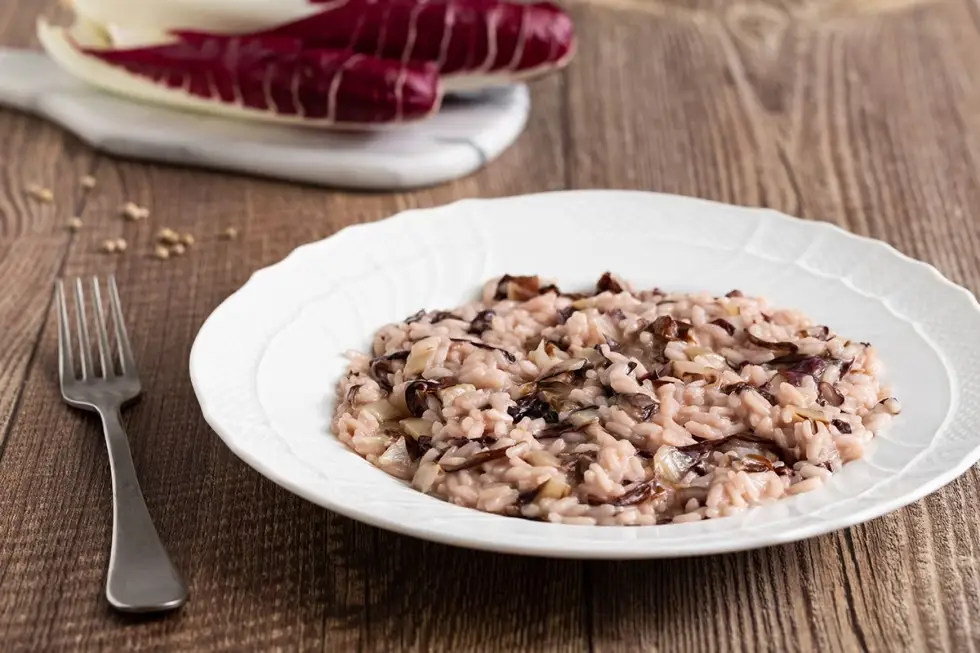
Risotto with Radicchio di Treviso, Sausage and Red Wine
Risotto al radicchio is one of the signature dishes of the Veneto, where risotto is traditionally made loose and creamy, what Venetians call all’onda, “like a wave”. This version adds red wine and fennel-scented Tuscan sausage. The wine colours the rice a deep burgundy and softens the radicchio’s bitterness, while the sausage adds richness and a savoury, peppery edge. It’s a proper winter dish, warming and generous.
Prep: 15 minutes | Cook: 35 minutes | Serves 4
Ingredients
- 320g Carnaroli Rice
- 250g Fresh Tuscan Sausages (about 3), casings removed
- 2 heads of Radicchio di Treviso (about 300g), cored and cut into ribbons
- 1 small onion or 2 shallots, finely chopped
- 2 tbsp Extra Virgin Olive Oil, Bono Salvatore
- 150ml dry red wine, such as Refosco Peduncolo Rosso DOC 2022, Organic, Vigne di Zamò
- 1.2 litres hot chicken or vegetable stock
- 30g unsalted butter
- 60g Parmigiano Reggiano PDO, 24 months matured or Grana Padano, 24 months matured, finely grated
- Salt and freshly ground black pepper
Method
1. Brown the sausage. Heat the olive oil in a wide, heavy-based pan over a medium-high heat. Squeeze in the sausage meat and crumble it into rough pieces. Cook for 6-8 minutes, stirring, until golden and lightly crisp. Lift it out with a slotted spoon and set it aside, leaving the fat in the pan.
2. Soften the onion and half the radicchio. Lower the heat to medium, add the onion to the pan and cook for 4-5 minutes until soft and translucent. Add half the radicchio and cook for 3-4 minutes until wilted and darkened. Keep the remaining radicchio aside for later.
3. Toast the rice. Add the rice and stir for 1-2 minutes until the grains are glossy and hot to the touch, coated in the fat.
4. Add the wine. Pour in the red wine and stir until it has almost completely evaporated and the rice has turned a deep, rosy burgundy.
5. Add the stock, ladle by ladle. Add a ladleful of hot stock, stirring gently, and wait until it has been absorbed before adding the next. Keep going for 16-18 minutes, stirring often, until the rice is creamy and just tender with a little bite in the centre. Keep the stock at a gentle simmer in a separate pan.
6. Finish. Two minutes before the end, stir in the remaining radicchio and the sausage. The fresh radicchio keeps a little crunch and a livelier, more bitter note against the mellowed rice.
7. Mantecare. Take the pan off the heat, add the butter and Parmigiano, and beat vigorously for a minute until glossy and creamy. Season with black pepper, and add salt only if needed, as the sausage and cheese are already salty. Cover and rest for 2 minutes. The risotto should be loose enough to ripple like a wave when you tilt the pan.
8. Serve. Spoon onto warm plates straight away, with a little more cheese and a grind of pepper.
A note from the kitchen: Carnaroli, often called the “king of risotto rice”, has the firm, plump grain that stays creamy without turning mushy, so it’s very forgiving. Don’t rinse the rice, as the starch is what makes the risotto creamy. Choose a wine you’d happily drink, since it contributes a lot of the flavour. Radicchio di Chioggia works too if you can’t find Treviso, though the texture will be slightly different. And if your radicchio is on the bitter side, soak the sliced leaves in cold water for 10 minutes and pat them dry before cooking.
What to drink with it
Rich sausage and bitter radicchio call for a red with freshness. For a true Veneto-style table, look next door to Friuli, home to some of Italy’s most characterful native red grapes:
- Refosco dal Peduncolo Rosso DOC 2022, Organic, Vigne di Zamò: made from a native Friulian grape named for its red stems, with blackberry, morello cherry and violet aromas, high natural acidity and a firm backbone. It is made for fatty meats like sausage and cuts cleanly through the richness of the risotto. Use it in the pan, then pour a glass from the same bottle, served at 16-18°C.
- Schioppettino DOC 2018, Vigne di Zamò: an old Friulian grape (also called Ribolla Nera) known for its peppery, spicy character, with wild berries, black pepper, cloves and a hint of leather. Silky tannins and good freshness make it a wonderful match for the fennel and pepper in the sausage, and a more refined choice for a special dinner. Also best at 16-18°C.
More from our Tuscan sausage kitchen
If you enjoy cooking with our Fresh Tuscan Sausages, try Salsiccia e Fagioli all’Uccelletto or Tagliatelle alla Norcina.
Shop this recipe