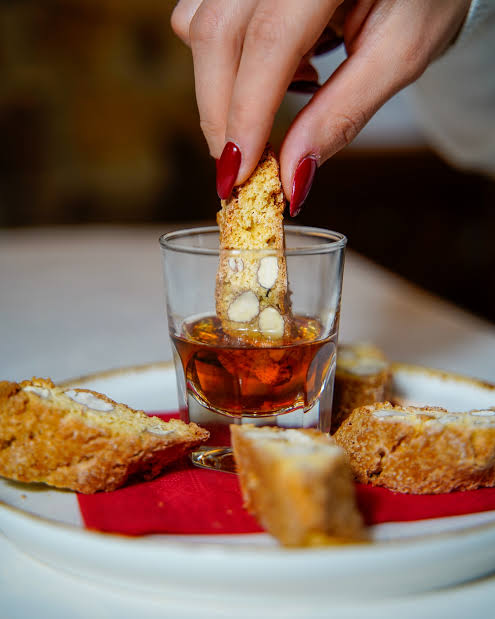
At the end of a long Tuscan dinner, when the plates are cleared and the conversation has settled into that slow, contented hum, a small tray appears. On it sit a bottle of amber wine, a few little glasses and a plate of hard, almond-studded biscuits. Nobody asks if you’d like dessert. It is simply what happens next.
This is Vin Santo with cantucci: a pairing so woven into Italian hospitality that it feels less like a recipe and more like a ritual. Here is the story behind it, how to serve it properly, and why a biscuit that could break a tooth is exactly what this wine was made for.
What is Vin Santo?
Vin Santo, literally “holy wine”, is a dessert wine made from dried grapes, most closely associated with Tuscany, though versions are made across Italy. It can range from nearly dry to richly sweet, and in colour from pale gold to deep amber. The flavours tend towards roasted hazelnut, dried apricot, orange peel, honey and caramel, with a long, nutty finish.
In Tuscany it is made mostly from white grapes, typically Trebbiano Toscano and Malvasia. Trebbiano brings freshness and acidity, while Malvasia gives body and perfume. A rosé style called Occhio di Pernice (“eye of the partridge”), made mainly from Sangiovese, is rarer and prized for its coppery colour and its richness.
How Vin Santo is made: patience in a barrel
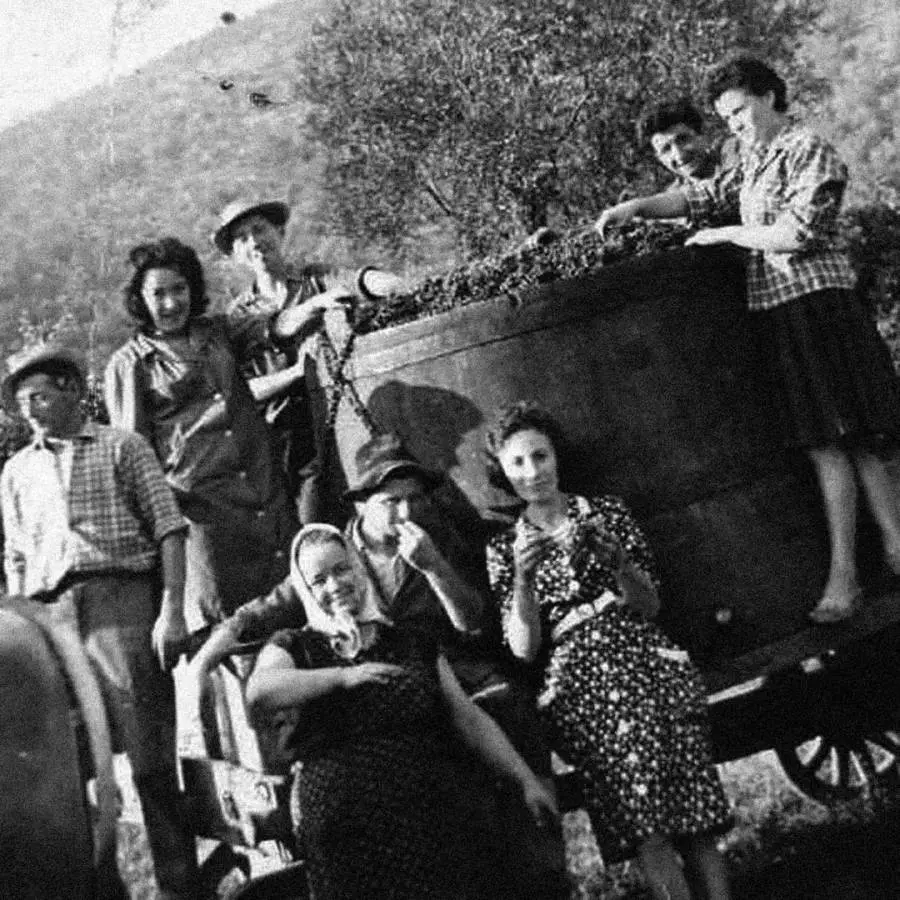
Few wines demand as much patience. Traditionally the best bunches are picked at the harvest and laid out on straw mats or hung from rafters in airy rooms for months, a method called appassimento. As the grapes dry, the water evaporates and the sugars concentrate.
The thick, sugary must is then sealed into small barrels called caratelli, often holding 50 to 200 litres. These are stored in an attic or loft known as a vinsantaia, where they feel the full swing of the seasons: warm in summer, cold in winter. Fermentation is very slow, and the wine stays in the barrel for years. Tuscan denominations such as Vin Santo del Chianti, Vin Santo del Chianti Classico and Vin Santo di Montepulciano require at least three years of ageing, and the best producers go well beyond that.
Many producers also use a madre, the “mother”: a thick residue of old wine and lees left in the barrel, which helps start the next fermentation. Some families have kept a mother going for generations, which is why Vin Santo is often described as a wine with a family history.
Why is it called “holy wine”?
Nobody knows for certain, and Tuscans enjoy arguing about it. The most popular theories are:
- The Mass: the sweet wine was used for the Eucharist, hence “holy”.
- The calendar: fermentation traditionally began around All Saints’ Day in early November, and the wine was bottled around Holy Week at Easter.
- A Greek connection: according to one popular legend, at the Council of Florence in 1439 a Greek cardinal tasted the local wine and compared it to the wine of Xanthos or Santorini, and the Tuscans, liking the sound of “santo”, adopted the name.
Whichever you prefer, it fits a wine that spends years quietly working in the dark before it is ready to be shared.
Cantucci: the biscuit that came to dunk
Cantucci (also called cantuccini, or biscotti di Prato) are twice-baked almond biscuits. The dough, made with flour, sugar, eggs and whole almonds, is first baked in long loaves. These are sliced on the diagonal while still warm, then returned to the oven to dry out into crisp, golden bites. Classic recipes use no yeast and no added fat, which is what makes them so hard and so long-lasting, although some modern versions add a little butter or honey for a softer, richer bite.
The biscuits are closely tied to the Tuscan town of Prato, and the tradition of almond biscuits in Tuscany goes back centuries, with some accounts tracing them to monastery kitchens as early as the 1300s. In the nineteenth century a Prato baker, Antonio Mattei, made them famous well beyond Tuscany, and the name “biscotti di Prato” has stuck ever since.
Cantucci are meant to be crunchy. They are not designed to be bitten into, but to be dipped.
Why they belong together
The match works on several levels:
- The texture: a dry, crunchy biscuit softens in the wine and releases its almond flavour, so each bite is part biscuit, part wine.
- The sweetness: cantucci are only lightly sweet, so they don’t compete with a rich dessert wine, they balance it. The Tuscans long ago worked out that the best partner for a very sweet wine is a less sweet biscuit.
- The flavour: nutty Vin Santo and almond biscuits echo each other, with caramel, toasted nuts and orange peel running through both.
- The ritual: dunking slows everyone down. This is a wine for lingering, which Italians call vino da meditazione, a wine for contemplation.
It also makes hospitality simple. A bottle, a few glasses and a plate of biscuits is all you need to make guests feel welcome, which is why Cantucci e Vin Santo is often described as Tuscany’s most famous welcome.
From our shelves: our Vin Santo and cantucci
Vin Santo DOC 2011, Colombaio di Cencio
This is a Vin Santo del Chianti Classico DOC in the Occhio di Pernice style, made mainly from Sangiovese with a little Malvasia and Trebbiano. The grapes are picked by hand in mid-September and left to dry on mats in well-ventilated rooms until the following spring. The must then ferments very slowly in small barrels (caratelli), where the wine rests for more than ten years before bottling.
The result is a dense, coppery-amber wine of around 16% alcohol, with aromas of honey, hazelnut, apricot, candied red fruit and almond. On the palate it is full-bodied and velvety, with dried figs, dates and raisins and a long finish that balances sweetness and freshness. Serve it cool, at 10-14°C, in small glasses, and treat it as a wine to sip slowly.
Golden, crunchy and generously packed with whole almonds (25%), these traditional Tuscan biscuits are made with a touch of butter and honey, which gives them a slightly richer bite. They are firm enough to take a good dunk without crumbling, and just as good with a morning coffee.
How to serve Vin Santo and cantucci
- Glass: a small wine glass or tumbler, poured sparingly. This is a wine to sip.
- Temperature: cool, around 10-14°C, rather than ice cold. Take the bottle out of the fridge a little while before serving so the flavours can open up.
- The dunk: hold a cantuccio by one end, dip it for a few seconds, and eat it before it falls apart. Then sip the wine.
- Keep the biscuits crisp: store cantucci in an airtight tin, as they absorb moisture quickly.
- Timing: serve at the end of the meal, with coffee, or on its own on a winter evening.
Beyond the biscuit: what else goes with Vin Santo?
Vin Santo is also very good with cheese and other sweet things. Its sweetness, nuttiness and acidity suit aged and blue cheeses in particular:
- Gorgonzola Piccante: the salty bite of blue cheese against the sweetness of the wine is a classic contrast, particularly with walnuts.
- Pecorino di Pienza Gran Riserva: a mature Tuscan sheep’s milk cheese, lovely with a drizzle of honey.
- Dark chocolate and dried fruit: a square of good dark chocolate, dried figs or an apricot tart all work beautifully.
- Honey, dried figs and walnuts: simple, seasonal and ideal for a cheeseboard. See our Jams & Honey selection.
Vin Santo at Christmas
With the festive season approaching, Vin Santo and cantucci are an easy answer to the question of what to serve after a big meal. They suit Christmas lunch, Boxing Day gatherings and New Year’s Eve alike, alongside a slice of panettone such as our Panettone Cioccolone, Albertengo. A bottle with a bag of cantucci also makes a lovely gift. Browse our full Christmas range for more ideas.
Frequently asked questions
Is Vin Santo sweet?
It can be anything from almost dry to very sweet. Most bottles served with cantucci are medium-sweet to sweet, with notes of honey, dried fruit and toasted nuts.
What is Occhio di Pernice?
It means “eye of the partridge” and refers to a rosé-coloured style of Vin Santo made mainly from red Sangiovese grapes, with a coppery-amber colour and a rich, concentrated flavour.
Is Vin Santo a fortified wine?
Traditionally no. It is a passito wine, made from dried grapes, and gets its strength from the natural concentration of sugars. Some versions, labelled liquoroso, are fortified, but these are less common.
Can you drink Vin Santo on its own?
Yes. A good Vin Santo is a wine to sip slowly, without food, as an after-dinner drink.
What are cantucci made of?
Flour, sugar, eggs and whole almonds, baked twice. Some modern versions also add butter and honey.
How do you eat cantucci with Vin Santo?
Dip the cantuccio briefly into the wine and eat it straight away, then sip the wine.
Shop the tradition