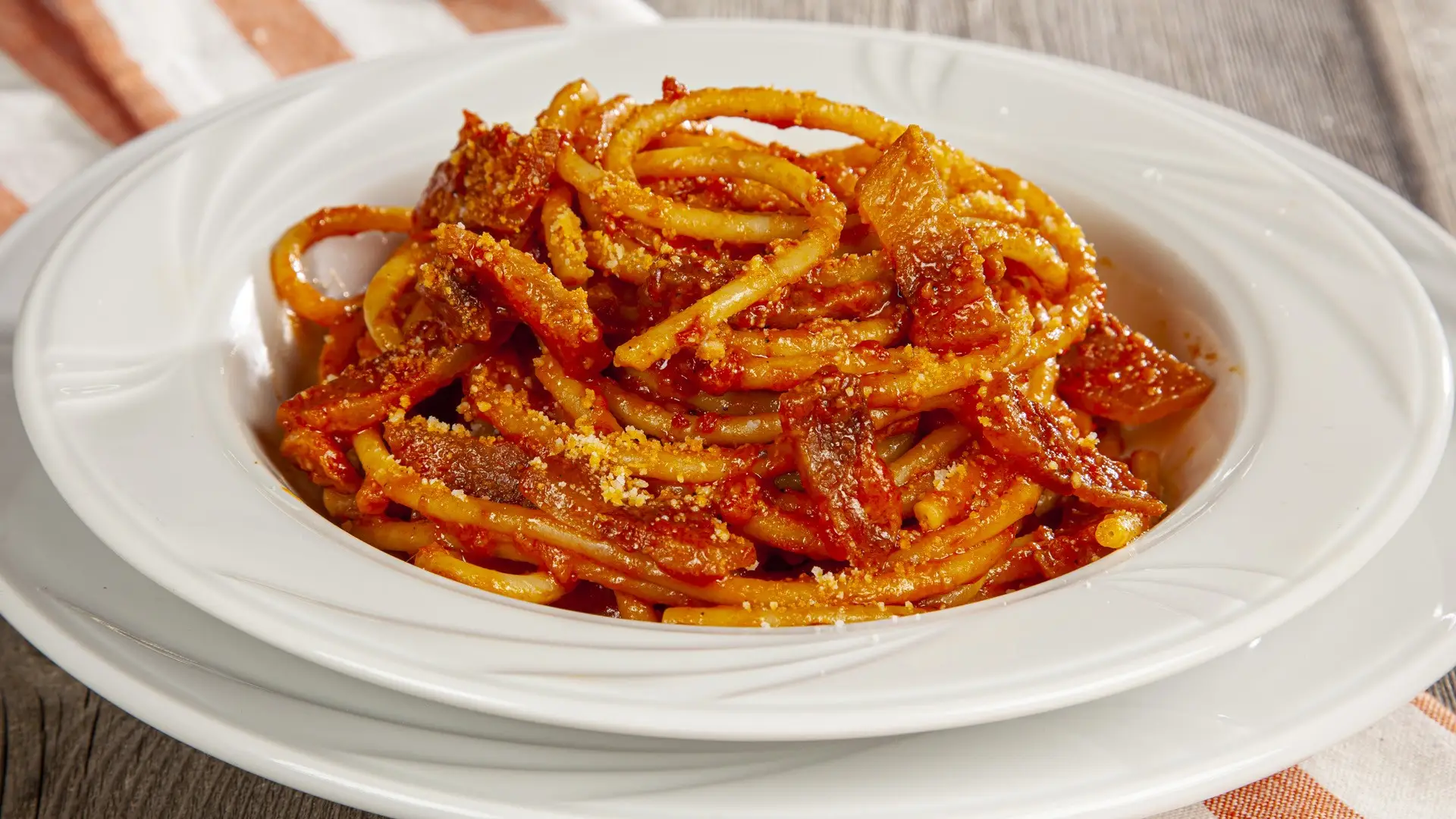
(Bucatini with guanciale, tomato and pecorino)
Few pasta dishes are as loved as the Amatriciana. It comes from the town of Amatrice, in Lazio, and has three simple stars: crisp guanciale (cured pork cheek), tomato and sharp pecorino, with a little chilli for warmth. It’s a close cousin of Roman gricia, which is the same dish without tomato.
The classic pasta for it is bucatini, long strands with a hollow centre that catch the sauce inside as well as out. We use Afeltra Bucatini, made in Gragnano with 100% Italian wheat, which has a rough surface that holds the sauce. Purists leave out onion and garlic, so the guanciale and tomato do all the work. A warning: bucatini splash, so keep a napkin handy.
Serves: 4
Prep: 10 minutes
Cook: 25 minutes
Total: 35 minutes
Ingredients
- 400g Afeltra Bucatini
- 200g Guanciale Toscano (one piece)
- About 350ml Tomato Passata Napoletana, Afeltra (roughly half a jar)
- 50g Pecorino di Pienza Gran Riserva, finely grated, plus extra to serve
- 1 small dried chilli, crumbled, or a pinch of chilli flakes (to taste)
- 50ml dry white wine (optional)
- Freshly ground black pepper
- Salt, for the pasta water only
Method
- Prepare the guanciale. Cut it into small strips, about 1cm wide and 3cm long. There’s no need for oil.
- Render it. Place the guanciale in a cold, wide frying pan and set over a medium-low heat. Cook for 8-10 minutes, stirring now and then, until the fat has melted and the pieces are golden and lightly crisp. Lift out the guanciale with a slotted spoon and set aside, leaving the fat in the pan.
- Build the sauce. Add the chilli to the fat and cook for 30 seconds. If using the wine, pour it in and let it bubble for a minute. Add the passata and simmer gently for 12-15 minutes, until it thickens slightly. Add a pinch of black pepper. Do not add salt yet, as the guanciale and pecorino are already salty.
- Cook the pasta. Bring a large pan of water to the boil and add a little salt. Cook the bucatini following the cooking time on the pack, and drain about 1 minute early. Keep a mugful of the pasta water.
- Bring it together. Return the guanciale to the sauce, add the drained bucatini and toss over a medium heat for a minute, adding a splash of pasta water until the sauce coats the pasta and looks glossy.
- Finish. Take the pan off the heat, add half the pecorino and toss again. Serve straight away with the rest of the pecorino and a twist of pepper.
Tips
- Start in a cold pan. This melts the fat slowly, so the guanciale crisps without burning.
- Don’t add much salt. Taste at the end.
- Use the pasta water. The starch helps the sauce cling to the bucatini.
- Add the cheese off the heat, or it can turn stringy.
- Cheese: the traditional cheese is Pecorino Romano. We use Pecorino di Pienza, a Tuscan sheep’s cheese, for a slightly sweeter, rounder flavour.
- Heat: add the chilli gradually and taste.
What to drink
You need a red with fresh acidity to match the tomato and cut through the rich guanciale.
- Chianti Classico Monticello DOCG 2023: a classic Tuscan red that goes naturally with tomato sauces.
- Barbera d’Alba DOC 2024, Fontanafredda: bright, fruity and fresh, with soft tannins.
Please drink responsibly.
Shop this recipe
- Afeltra Bucatini 500g
- Guanciale Toscano 200g
- Tomato Passata Napoletana, Afeltra 680g
- Pecorino di Pienza Gran Riserva
Storage and allergens
Leftover sauce keeps in the fridge for up to 2 days. Reheat gently and toss with freshly cooked pasta.
Allergens in this recipe: gluten (wheat, in the pasta), milk (pecorino) and sulphites (wine, if used). The guanciale contains pork and curing agents (E250, E252). Not suitable for vegetarians.
Frequently asked questions
What is Amatriciana?
A Roman pasta sauce from Amatrice, made with guanciale, tomato, pecorino and chilli.
Should Amatriciana have onion or garlic?
The traditional recipe doesn’t. Many home cooks add a little onion, but we follow the classic version.
Can I use pancetta instead of guanciale?
Yes, but guanciale is richer and more flavourful. Pancetta is milder and has less fat.
What pasta is best for Amatriciana?
Bucatini is the classic, but spaghetti, rigatoni and mezze maniche also work well.