When most people think of a barbecue, they picture burgers, hot dogs, and bottles of ketchup. The Italian version — the grigliata — is a different thing entirely. Slower, more convivial, and built around the quality of a few well-chosen ingredients rather than a crowded grill, it is less of a cooking method and more of a way of spending an afternoon with people you like.
It Starts Long Before the Coals Are Lit
In Italy, the barbecue is an occasion. It tends to happen on a Sunday, it tends to last for hours, and the preparation begins well in advance. Meat is seasoned simply — olive oil, salt, perhaps a sprig of rosemary or a few sage leaves — and left to come to room temperature before it goes anywhere near the heat. There is no elaborate marinating, no bottled sauces. The Italian philosophy is that good meat, treated with respect, does not need to be disguised.
The fire itself is taken seriously. Italians overwhelmingly prefer wood or lump charcoal over gas. The smell of the smoke is considered part of the meal.
What Goes on the Grill
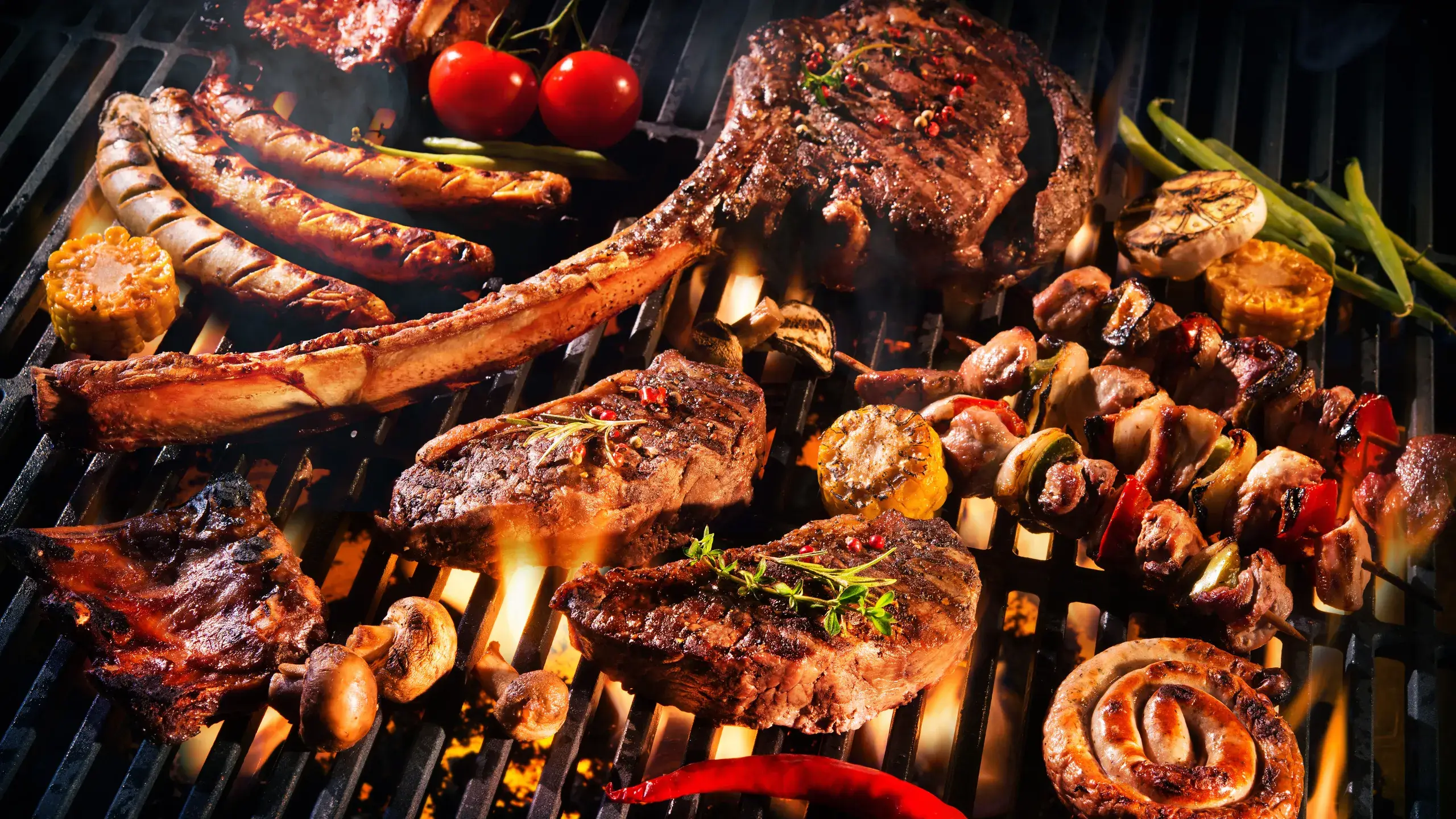
The centrepiece of any Italian grigliata mista — mixed grill — is the meat selection, and it typically includes a combination of the following:
Salsicce — coarse-ground pork sausages, seasoned simply with salt, pepper, and sometimes a little wild fennel. They are grilled slowly over a medium heat until the skin is blistered and the fat has rendered. No ketchup. Perhaps a squeeze of lemon.
Costine — pork ribs, rubbed with salt and cooked low and slow over indirect heat until the meat begins to pull away from the bone.
Bistecca — if the occasion calls for it, a thick-cut T-bone or ribeye, seasoned with nothing more than coarse salt and finished with a thread of olive oil and a few drops of lemon. In Tuscany, the bistecca alla Fiorentina — a vast, rare T-bone from the Chianina breed — is the undisputed king of the grill.
Pollo alla diavola — spatchcocked chicken, pressed flat and grilled over a medium heat, typically with olive oil, lemon, chilli, and garlic. Crisp skin, juicy inside.
Verdure grigliate — vegetables are not an afterthought. Courgettes, peppers, aubergine, red onions, and corn are all sliced, brushed with olive oil, and cooked directly on the grill until charred and tender. They are usually finished with a drizzle of good olive oil and a pinch of salt.
The Sides and the Table
The grill is only part of the picture. The table around it tells the rest of the story. Alongside the grilled meats and vegetables, you would typically find:
- Bruschetta — thick slices of bread grilled over the coals, rubbed with raw garlic while still hot, and finished with olive oil and a pinch of salt. Sometimes topped with ripe tomatoes, sometimes left plain. Either way, they are often the first thing to disappear.
- Fagioli all’uccelletto — white beans slow-cooked with sage, garlic, and tomato, served warm alongside the sausages. A classic Tuscan pairing.
- Insalata mista — a simple green salad dressed with olive oil and red wine vinegar, brought to the table late in the meal.
- Panzanella — a Tuscan bread salad made with day-old bread soaked in water, then squeezed dry and tossed with ripe tomatoes, red onion, basil, olive oil, and a splash of vinegar. Deeply seasonal, deeply good.
The Wine
A grigliata without wine is unthinkable. Red wine is the default — something local, unpretentious, and well-chilled. In Tuscany that might be a young Chianti or a Morellino di Scansano. In the south, a Primitivo or Nero d’Avola. For a summer grigliata, some hosts will also put a chilled rosato on the table, particularly if fish or chicken is on the grill.
The Pace of It All
Perhaps the most important thing to understand about an Italian barbecue is that nobody is in a hurry. The grill is managed by one person — usually self-appointed, always opinionated about heat management — while everyone else sits in the shade, talks, and picks at bruschetta. Children run around. Wine is poured. The meat comes off the grill gradually, plate by plate, rather than all at once.
There is no grand moment where everything lands on the table simultaneously. Instead, the afternoon unfolds in waves: the bread first, then the vegetables and sausages, then the ribs, then perhaps the bistecca if there is one. By the time the fruit and cheese appear, several hours have passed and nobody quite remembers how.
That, more than any particular recipe, is the spirit of the Italian grigliata.