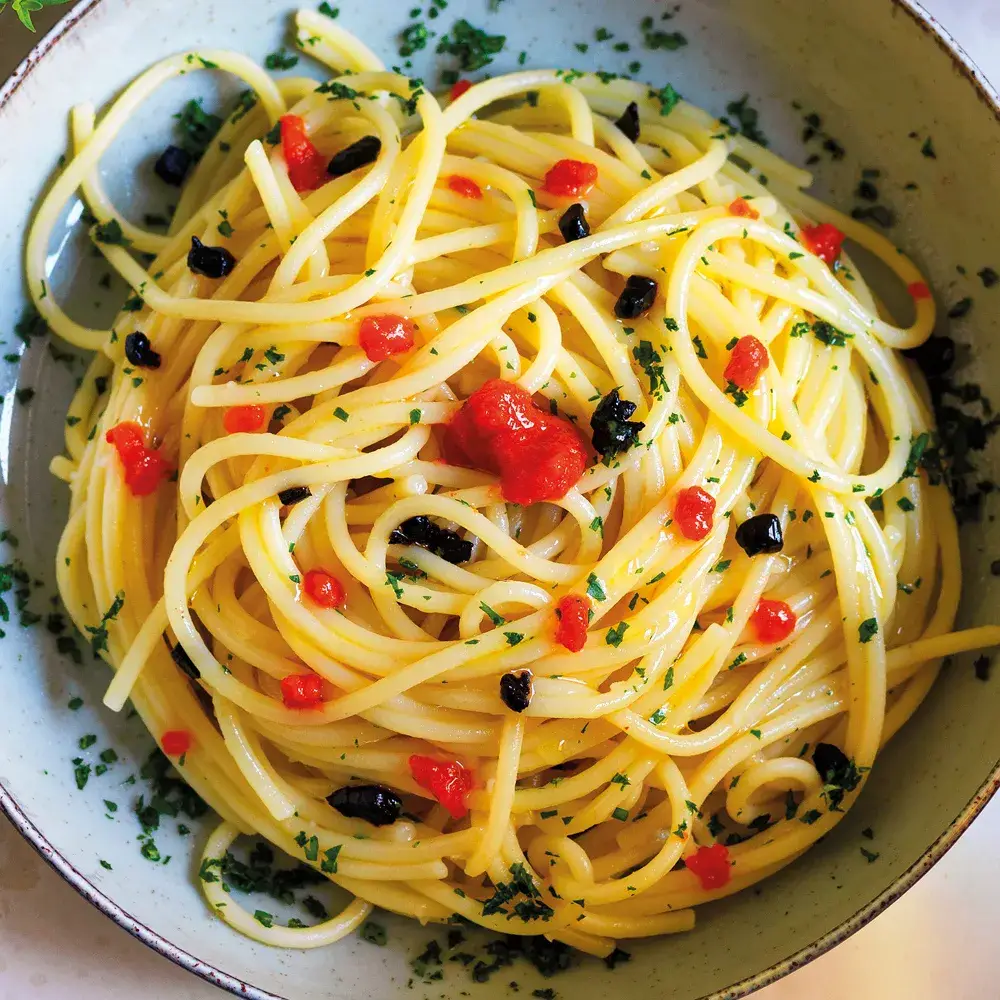
There’s a dish every Italian knows by heart, not because their nonna taught them, but because it’s the one thing you can cook at 2am with your eyes half closed and your ears still ringing from the music. Spaghetti Aglio, Olio e Peperoncino is Italy’s great after-midnight ritual. It needs no fridge raid, no shopping list, nothing but a few staples that live in every Italian kitchen: garlic, olive oil, chilli, spaghetti, parsley.
It’s the dish of the “cucina povera,” poor kitchen cooking, born out of necessity in Naples, where a plate of pasta had to be made from whatever was left after everything else had run out. But over the decades it’s taken on a second life entirely: the dish you make when you stumble home from a party, or after a late night out with friends, hungry in that specific way that only a night of dancing and talking too much can leave you. It’s fast, it’s fragrant, and it somehow tastes better at 1am than it ever would at lunchtime. Ask any Italian and they’ll tell you: this is not a dinner dish. This is a survival dish, a comfort dish, a “we’re still awake and we’re still hungry” dish.
What makes it work is restraint. There is no cheese here, no cream, nothing to hide behind. Just garlic gently sizzled in good olive oil until it turns golden and sweet, a generous pinch of chilli flakes for heat, a splash of the starchy pasta water to bring it all together into a light, glossy sauce, and a scattering of parsley at the end. Simple, but only good if every element is good. This is a dish where quality of ingredients matters more than technique.
Ingredients (serves 4)
- 400g spaghetti
- 6 cloves garlic, thinly sliced
- 1-2 fresh red chillies, finely chopped (or 1 tsp dried chilli flakes, to taste)
- 120ml extra virgin olive oil, plus more to finish
- A generous handful of fresh flat-leaf parsley, roughly chopped
- Sea salt
- A ladle of pasta cooking water, reserved
Method
Bring a large pot of water to the boil. Salt it properly, it should taste like the sea. Drop in the spaghetti and cook until a minute or two short of al dente, since it will finish cooking in the pan.
While the pasta cooks, warm the olive oil in a wide pan over a low-medium heat. Add the sliced garlic and let it cook slowly, stirring often, until it turns pale gold and smells sweet rather than sharp. Don’t rush this step and don’t let it brown, burnt garlic turns bitter and there’s no coming back from it.
Add the chilli to the pan and let it sizzle gently in the oil for thirty seconds or so, just enough to release its heat into the fat.
Just before the pasta is ready, scoop out a cup of the starchy cooking water and set it aside. Drain the spaghetti and tip it straight into the pan with the garlic and chilli oil.
Turn the heat up slightly and toss everything together, adding a splash of the reserved pasta water a little at a time. Keep tossing and adding water until the sauce turns glossy and clings to the strands, this is the moment the dish comes together. You’re not making a soup, just enough liquid to loosen the oil into a light, silky coating.
Take the pan off the heat, stir through most of the parsley, and finish with a generous drizzle of good olive oil and the rest of the parsley on top. Taste and adjust the salt.
Serve immediately, straight from the pan if you can. This is not a dish that waits.
A note on quality
Because there’s nowhere to hide in this recipe, the ingredients carry the whole dish. Use a fruity, full-flavoured extra virgin olive oil, not a delicate one, since it’s doing most of the work here. The same goes for the garlic and chilli: fresh, good quality, and treated with a little patience over the heat rather than rushed. A well-made bronze-die spaghetti, the kind with a slightly rough surface, will hold the oil and sauce far better than a smooth industrial one.