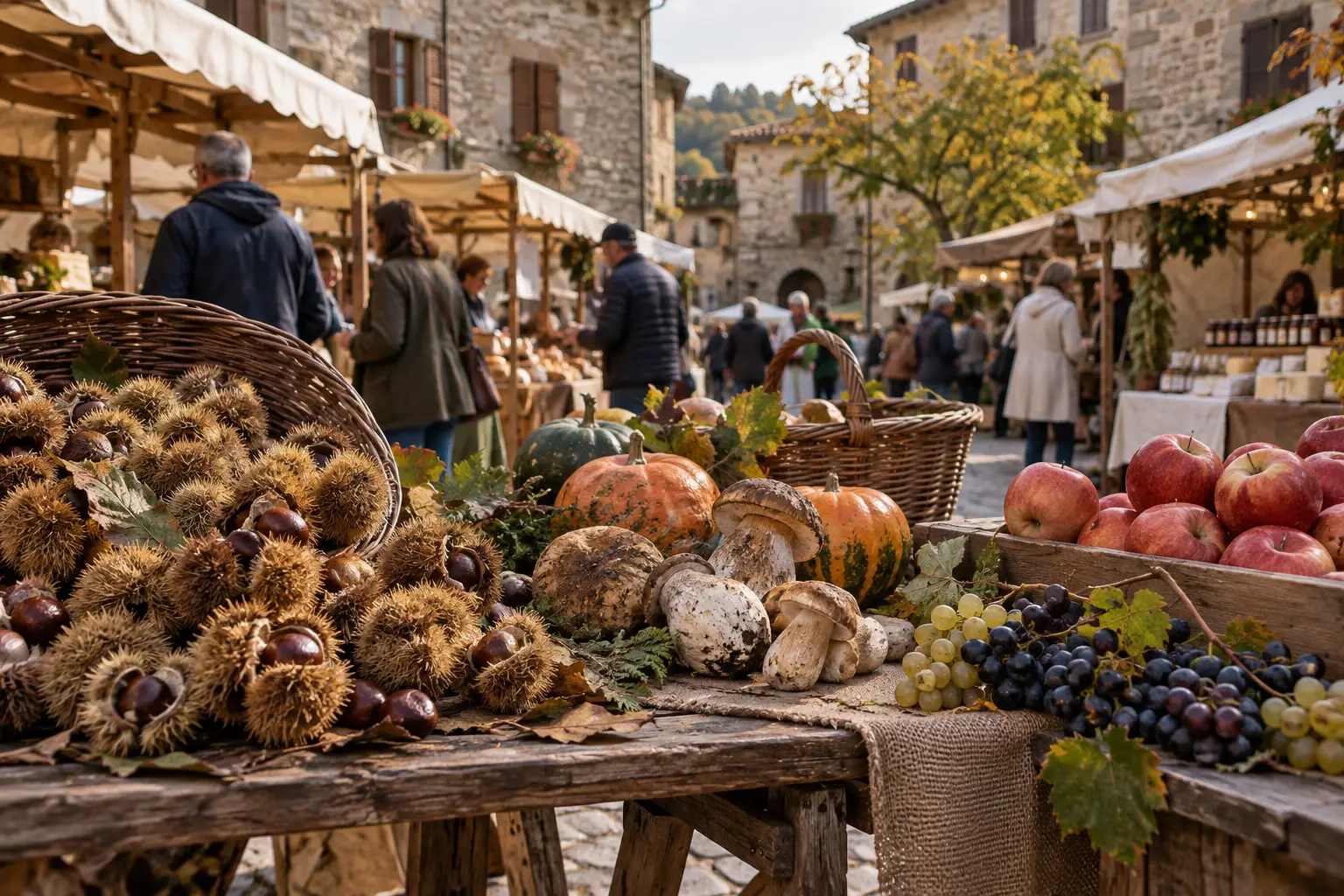
There’s a particular sound that means autumn has arrived in Italy, and it isn’t falling leaves. It’s the clatter of folding tables being set up in a village piazza, the hiss of a chestnut pan, and an accordion somewhere in the distance. From September through November, almost every town, however small, throws open its doors for a sagra: a food festival built entirely around one ingredient, one dish, sometimes one single vegetable that the town has decided, at some point in its history, is worth celebrating.
If you want to understand how Italians actually eat, rather than how cookbooks say they eat, the sagra is where to look.
What exactly is a sagra?
A sagra (plural sagre) is a local food festival, usually run by volunteers, a parish, or the town’s pro loco (a kind of civic tourism association), held to mark a harvest or a patron saint’s feast day. Unlike a food market or a festival aimed at tourists, a sagra exists first and foremost for the people who live there. Long trestle tables are set up under gazebos or in the town square, a makeshift kitchen is assembled by whoever in the village is best at cooking that particular dish, and for one weekend a year, the entire community eats the same thing, together, at the same long tables.
Autumn is peak sagra season, because autumn is when Italy’s most celebrated ingredients come in: chestnuts, porcini and other wild mushrooms, truffles, new olive oil, the first pressing of new wine, pumpkin, wild boar. Each of these has its own dedicated festival, somewhere.
The classics of the autumn calendar
- Sagra della Castagna (the chestnut festival), found across the Apennines from Tuscany to Calabria, where chestnuts are roasted over open braziers and eaten by the paper cone-full, often alongside new wine.
- Sagra del Tartufo, the truffle festivals of Piedmont and Molise, timed to the white and black truffle seasons, where entire menus are built around a single shaving.
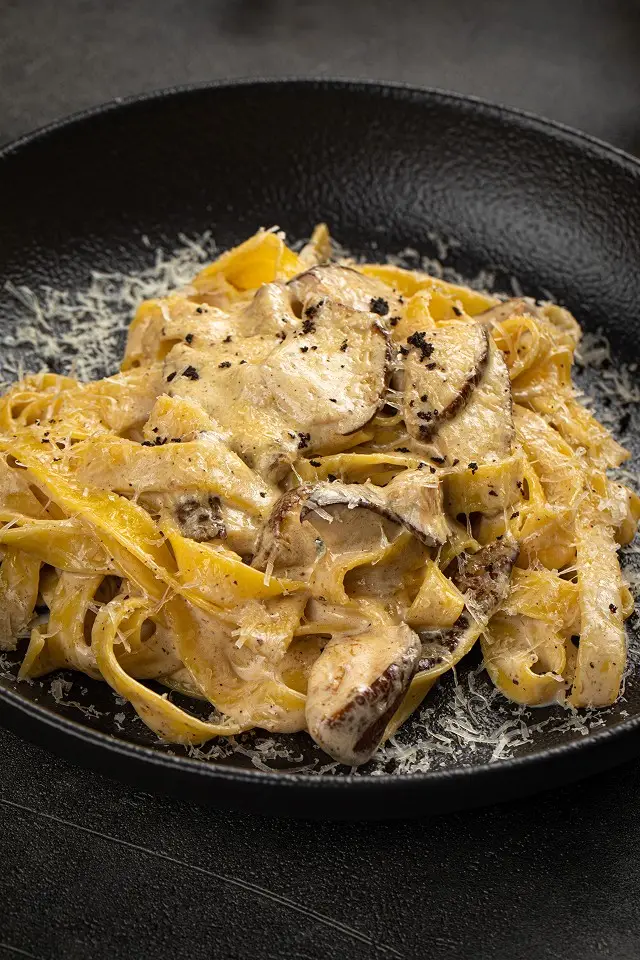
- Sagra dei Funghi, mushroom festivals in wooded regions, celebrating the porcini harvest with everything from tagliatelle ai funghi to grilled whole caps.
- Sagra dell’Uva, grape and new wine festivals tied to the vendemmia, the grape harvest, often the last big outdoor sagra before the weather turns properly cold.
- Sagra della Zucca, pumpkin festivals, particularly in the Po Valley and Mantua, where pumpkin turns up in everything from tortelli to risotto.
Why it matters more than the food itself
The genius of the sagra is that it isn’t really about impressing anyone. There’s no Michelin star chasing a chestnut stall. The cooking is often simple, sometimes even a little rough around the edges, made by whoever volunteered that year rather than a trained chef. What matters is that the whole town shows up, eats the same thing at the same tables, and treats a humble local ingredient as something worth a weekend of celebration.
It’s also, quietly, how regional Italian food culture survives. A sagra dedicated to a specific variety of bean, or a particular way of preparing wild boar, keeps a very local tradition alive in a way that no restaurant menu or cookbook chapter ever quite manages. If you travel through rural Italy in October and stumble on one, uninvited, you’ll usually be waved straight to a table.
Bringing a little sagra spirit home
You don’t need a village piazza to borrow the idea. The spirit of the sagra is really about letting one good seasonal ingredient take centre stage rather than complicating things. A pan of chestnuts roasted at home, a simple dish built around good porcini, a glass of new-season wine and some proper bread; that’s the sagra approach, wherever you happen to be eating.
Bring the season home
- Our wild mushroom and truffle range from Tesori del Matese, ideal for an autumn table
- Italian chestnut products and seasonal preserves
- New season Italian wines, for your own small vendemmia moment